
Tag: Tips & Tricks

  • Need FREE Moving Boxes? Top 10 Places to Find the Best Boxes!

    Need FREE Moving Boxes? Top 10 Places to Find the Best Boxes!

    Finding free moving boxes can significantly reduce the cost of your move. Remember that not all boxes are created equal. There are 3 things to consider before going for those free moving boxes.

    1. ECT Rating (Edge Crush Test Rating) – This is printed on the seal of most boxes and tells the strength of the box. If you have a stack of boxes bouncing down the road you don’t want your boxes collapsing and so getting a quality or tough box is key. A side note: Boxes will lose their structural integrity the more times they are used.
    2. Tightness of Your Load: If you are moving around the corner this isn’t a deal braker, but boxes that have a similar footprint or in other words stack nicely because they are similar in length and depth can help you pack tighter and this could be the difference of thousands of dollars if you are moving across the country.
    3. Type of Box: Your time is valuable and so choosing boxes that are not only easy to label with a marker and boxes that have easy flaps to tape shut are important when you have a whole house to pack.

    NOW LETS GET STARTED: Here are ten of the best places to get free boxes:

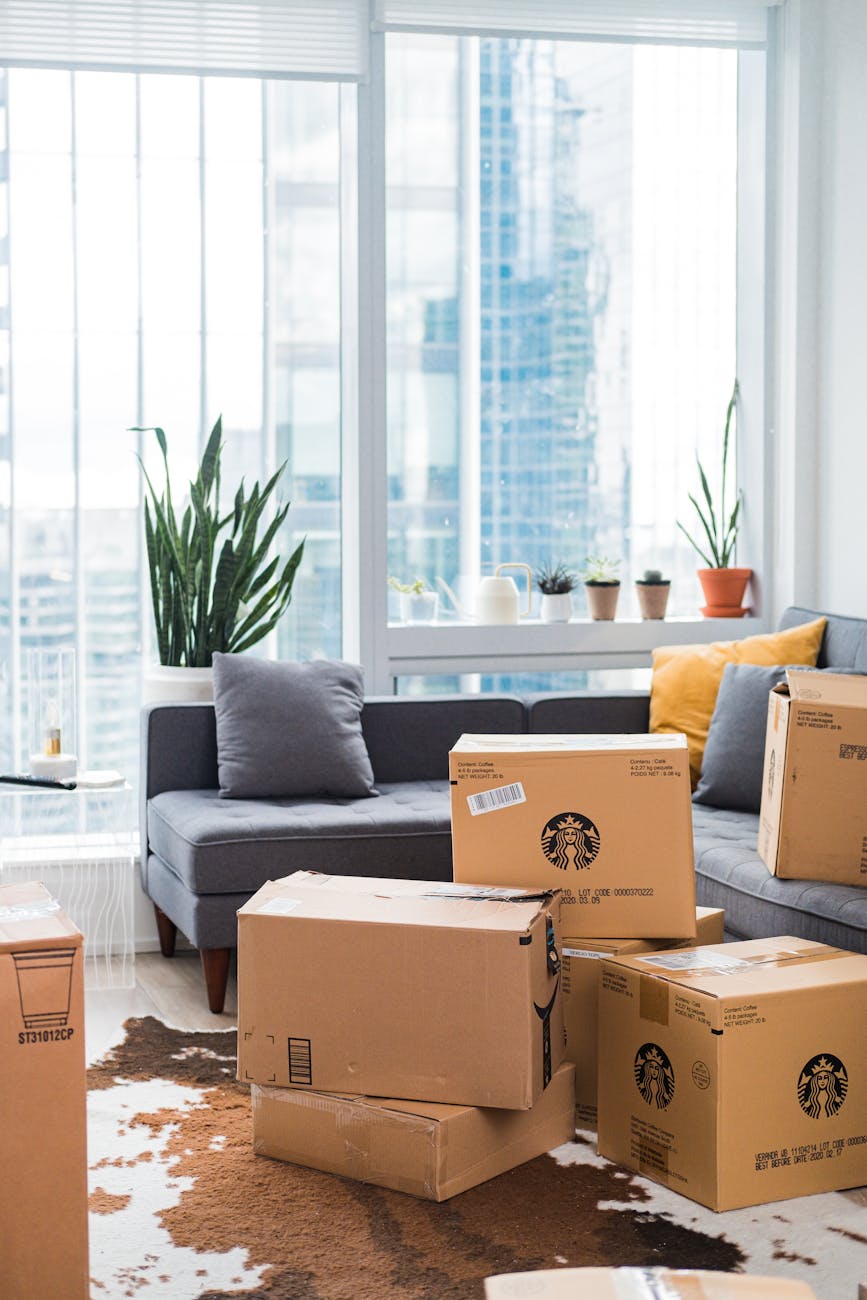
    Photo by cottonbro studio on Pexels.com
    1. Grocery Stores: Grocery stores receive shipments regularly and often have sturdy boxes from produce, canned goods, and other products. Ask the store manager or staff if they have any boxes to spare.
    2. Liquor Stores: Liquor boxes are especially durable and often come with dividers, making them ideal for packing fragile items. Check with your local liquor store for availability. Remember you might get some looks though when you go to move your house and all people see is liquor boxes.
    3. Bookstores: Bookstores receive many shipments and have strong boxes that are perfect for packing books and other heavy items. Local independent bookstores and large chains like Barnes & Noble can be good sources of strong boxes.
    4. Retail Stores: Big-box retailers like Walmart, Target, and Costco, as well as smaller retail stores, often have plenty of boxes from their deliveries. Ask a store employee if they have any boxes they can give you. Many stores like Walmart stock late at night or early in the morning and you can talk to someone at the store to see when the best time to grab boxes is.
    5. Office Supply Stores: Stores like Staples or Office Depot receive large deliveries of paper and office supplies, which means they often have sturdy boxes available.
    6. Restaurants and Cafés: Foodservice establishments frequently receive shipments of ingredients and supplies in durable boxes. Check with local restaurants, cafés, and fast food chains for their excess boxes.
    7. Friends & Neighbors: Keep an eye out for any neighbors that have moved recently because they may be wanting to get rid of some boxes. Also if you have any neighbors with toddles or dogs whey might have diaper boxes or Chewy boxes which make for great moving boxes.
    8. Facebook Marketplace and Community Groups: Online platforms like Facebook Marketplace, local buy/sell groups, and community groups often have people giving away moving boxes for free.
    9. Hospitals & Medical Centers: Many of these places get large shipments of heavy items. I can personally attest to the quality of Cardinal Health boxes which you can find at a lot of hospitals.
    10. U-Hauls & Local Moving Companies: Many moving companies and U-Haul’s get used boxes from customers and will give them to you. It never hurts to check with these local businesses and companies.

    When collecting free boxes, make sure they are clean, sturdy, and in good condition to ensure the safety of your belongings during the move. Feel free to call us if you are ever interested in free moving boxes and we would love to hook you up if we have some.


    ***Subscribe to not miss any other awesome moving materials.***

    To get exclusive FREE access to all our moving materials, tools, and tips & tricks, call us for a free moving estimate. It is that easy! For a free moving estimate and tons of free stuff that will make your move simple and stress-free >> CLICK HERE

    We also think you will find this article useful as well>> 5 Secret Moving Tips that Could Save you Thousands $$ >> CLICK HERE

    Let us know in the comments anything you would add or let us know if we missed anything.

    Photo by cottonbro studio on Pexels.com
  • Moving with Pets >>> Tricks & Tips

    Moving with Pets >>> Tricks & Tips

    Moving can be stressful for pets, but with careful planning and consideration, you can help ease the transition for them. Here are 20 tips to make moving with pets smoother.

    You might be moving with either of these types of animals
    Photo by Alexander Grey on Pexels.com

    1. Update ID Tags: Make sure your pets’ ID tags have your new address and contact information.

    2. Visit the Vet & Groomer: Before you move, schedule a visit to the vet to ensure your pets are healthy and up-to-date on vaccinations. Also groom your animal prior to the move just in case it is hard to find one in your new area.

    3. Obtain Records: Get copies of your pets’ medical records to provide to your new vet.

    4. Pet-Friendly Accommodations: If you’re moving long-distance, plan your accommodations with pet-friendly hotels or temporary housing.

    5. Keep a Routine: Maintain your pets’ feeding, walking, and playtime routines as much as possible before, during, and after the move.

    6. Secure Transport: Use secure carriers or crates for transporting pets in the car. For long distances, consider getting your pet used to the carrier beforehand.

    7. Update Microchip Information: If your pet has a microchip, update the information with your new address and phone number.

    8. Pack Familiar Items: Bring your pets’ favorite toys, blankets, and bedding to provide comfort in the new environment. Also adding a new toy or treat could help keep your pet more occupied and less likely to stress.

    9. Gradual Introductions: If possible, introduce your pets to their new home gradually, starting with one room and gradually expanding their access.

    10. Safe Space: Set up a designated safe space in your new home where your pets can retreat and feel secure on moving day when things are hectic.

    11. Pet-Proofing: Ensure your new home is pet-proofed by removing any hazards and securing windows and doors. This might even include knowing what plants in your new home could be harmful to your pet.

    12. Supervision: Supervise your pets closely in the new environment to prevent accidents or escapes.

    13. Explore Together: Take your pets on leashed walks around the neighborhood to help them become familiar with the area and make new friends.

    14. Maintain Rules: Reinforce rules and boundaries with your pets in the new home to establish a sense of normalcy. Be sure to put food, beds, cages in similar rooms so they can adapt quicker.

    15. Monitor Stress Levels: Watch for signs of stress in your pets, such as hiding, excessive vocalization, or changes in appetite, and provide comfort as needed. See your vet if problems last longer than a week.

    16. Update Pet Records: Update your pets’ information with the local authorities, such as registering them with the city or obtaining any necessary licenses. Also research the area you are moving to ahead of time so see any pet restrictions or regulations.

    17. Find a New Vet, Groomer & Pet Boarding: Research and establish a relationship with a new vet in your new area. You can ask for recommendations from local pet groups on social media.

    18. Continue Training: Consistency is key. Continue training your pets in the new environment to maintain good behavior. Make sure you have snacks on hand so you can reinforce positive behaviors in your new home.

    19. Give them Attention: Moving is very stressful and can take up a lot of your valuable time. Spending quality time with your pets will help them adapt quicker and will keep them from causing damage out of stressful behavior.

    20. Patience and Reassurance: Be patient with your pets as they adapt to the changes, and provide plenty of love, attention, and reassurance throughout the process.

    By following these tips and tricks, you can help ensure your pets survive and thrive and settle into their new home.

    ***Subscribe to not miss any other awesome moving materials.***

    Get a downloadable version on our Etsy page along with other great resources >> https://oxmovingtools.etsy.com

    All our moving materials, tools, tips & tricks come free when you book a free moving estimate with us. Just use the link below to claim.
    >> For a free moving estimate and tons of free stuff >> CLICK HERE

    We also think you will find this article useful as well
    >> 5 Secret Moving Tips that Could Save you Thousands $$ >> CLICK HERE

    Let us know in the comments anything you would add or let us know if we missed anything.

  • Essential Moving Day Box

    Essential Moving Day Box

    This box will help you stay organized and keep you prepared for moving day and ever worst case scenario.

    Photo by cottonbro studio on Pexels.com

    General Essentials

    • Moving Binder***
    • Storage Unit Keys
    • House Keys
    • Spare Car Keys
    • Post-it Notes
    • Checkbook
    • Phone – Wall Charger
    • Phone – Car Charger
    • Copy of ID or Driver’s License
    • Copy of Insurance Cards
    • Medical Records
    • Emergency Cash

    Health Stuff

    • Medacine – daily meds + tylonol + IB Prophin
    • First Aid Kit

    Carpet

    • Carpet Protector Film
    • Blanket

    Kitchen

    • Paper Plates
    • Plastic Utensils
    • Paper Towels
    • Disposable Cups
    • Bottled Water
    • Ziplock Bags
    • Road Snacks

    Bathroom

    • Flushable Wipes
    • Toilet Paper Roll
    • Toiletries
    • Hand Soap
    • Towel

    Bedroom

    • Change of Clothes
    • Inflatable Mattress
    • Sheet Set
    • Pillows

    Emergency

    • AAA Batteries (8 total)
    • AA Batteries (4 total)
    • Emergency
    • 9V Batteries (2 total)
    • Flashlight
    • Padlocks (one per truck)
    • Scissors
    • Extra Roll of Box Tape
    • Masking Tape – For labelling
    • Sharpie

    Basic Tools

    • Screwdriver or Drill
    • Pliers – Two Sets
    • Adjustable Crescent Wrench
    • Allen/Hex Wrench
    • Tape Measure
    • Hammer & Nail – Take off doors
    • Utility Knife

    *** Check out our moving binder checklist to see what you should have in your “Moving Binder”

    Photo by Anna Shvets on Pexels.com

    These are some additional items you may want to add to your moving day box so you can be prepared for kids or pets

    Kids’ Moving Day Backpack

    • Snacks
    • Change of Clothes
    • Favorite Small Toys
    • Pillow
    • Blanket

    Babies

    • Flushable Wipes
    • Diapers
    • Desitin Cream
    • Extra Pacifiers
    • Sound Machine
    • Toys
    • Blankets – Bring Two
    • Bottles & Formula
    • Pack & Play
    • Carrying Harness

    Dogs & Cats

    • Kennel or Carrying Crate
    • Poop bags or litter box
    • Paper Towels
    • Disposable Cups
    • Bottled Water
    • Ziplock Bags
    • Road Snacks

    Remember: Many of these items you may find useful at the place you are moving out of or you might need them when moving into your new place.

    Staying organized is the key to a stress-free & successful move. For more checklists and moving tools check us out.


    ***Subscribe to not miss any other awesome moving materials.***

    Get a downloadable version on our Etsy page along with other great resources >>> https://oxmovingtools.etsy.com

    All our moving materials, tools, tips & tricks come free when you book a free moving estimate with us >>> CLICK HERE

  • MOVING? General Packing Tips & Tricks from a Pro

    MOVING? General Packing Tips & Tricks from a Pro

    The tips we are sharing here will help you save tons of money on your move through these packing tips & tricks that with lots of years in the moving industry has proven time and time again to save people tons of money.

    Photo by Ketut Subiyanto on Pexels.com

    GENERAL TIPS

    • Use clear packing tape to close up your boxes – Clear tape is the most durable long term option. Paper tape is super sticky, but is affected by moisture and age which will cause it to fall off if it sits in storage or in a humid environment. Brown poly tape is for taping blankets to furniture, because it can be broken by hand. So use the clear poly 2″ tape and your boxes wont be falling apart on you while you try to move them.
    • Clearly label all sides of the box – This is a serious time saver especially if you hire or have people helping you move. People often label just the top of the box and then when you stack them all on a dolly you can’t tell what goes where. By labelling boxes on all 4 sides and the top of the box it makes it easy to know where each box is going. We use short labels so labelling the boxes is quicker. For example: LR = Livingroom, KIT = Kitchen, OFF = Office, MBR = Master Bedroom, BDR = Bedroom, GR = Garage, and a circled F means Fragile to name a few.
    • Label the contents of the box on its top – Over labeling boxes is easy to do at first and might be necessary in some circumstances, but it will lead to packing burnout. Try using general labels describing the contents of the box. Don’t get too detailed on every box or you will burn out early. I like to label contents like: silverware + misc because the silverware is the important thing in the box I may need to access and the other stuff isn’t, need right away stuff.
    • Cross out old labels – As a mover this happens a ton especially when someone is reusing boxes. Avoid confusion and boxes getting placed in the wrong rooms by scribbling out old labels. Ideally if you move a lot you can pre-sort the used boxes with room labels by their room and then you just need to cross out the contents on top.
    • Don’t overload old moving boxes – Heavy boxes are generally placed on the bottom of a stack, but if they are heavy and old, they are likely to collapse under a load. This can cause damage to not just the old overloaded box, but also could cause a load to collapse causing the entire shipment to be lost.
    • Use moving boxes a max of 2 times – Over 2 times of use, the labels start getting confusing and they start to rip or collapse. You might think you are saving a few hundred dollars, but if your stuff gets damaged as a result then those savings are quickly lost.
    • Label boxes correctly – Label boxes if possible by the rooms they go into at your new house and not by the rooms they came out of. Nothing is more time consuming then having to open a box labelled office from the last house that goes into your bedroom at the new house so you have to open each box labelled office to find out.
    • Label fragile boxes – Label with fragile on each side of the box. If the box is bulging due to fragile items in the box, then label it with TOP on all 4 sides so it is placed on top of a load. Bulging boxes have lost their vertical stacking integrity. Also if a box is not labelled clearly with “Fragile” then it might get placed in a truck in a place that could cause damage to that item.
    • Extremely Fragile – Sometimes if we are moving china, wine glasses, or a very expensive fragile item then mark it will extremely fragile. This will allow whoever is loading your truck to go the extra mile with those items.
    • Label liquid boxes – Liquid boxes must have an arrow on every side pointing up and be marked on each side with LIQ for liquids. It is also smart to line the box with a trash bag in case of leaking. I have seen bleach spill in a box once and bleached the hardwood floors where the box was sitting. Arrows help it always stay upright.
    • Stick tape correctly – Tape needs to be pressed down firmly, the tape should wrap around the edges of the box by 4+ inches, and use more strips for heavier boxes. For some heavy boxes I will do two strips across the seam on the bottom and then one perpendicular to that to strengthen it.
    • Create a bumper in the bottom of fragile boxes – Use bubble wrap in the bottom or crumpled up packing paper to create a cushion bumper in the bottom of the box. This creates a cushion to absorb the bouncing of the truck.
    • Double Up – Use Foam peanuts with bubble wrap for ultra fragile items
    • Fragile item boxes – They should be preferably packed in small boxes and/or double corrugated boxes. Both of those types of boxes have more structural integrity. Using smaller boxes allows more flexibility to find a safe spot for the box in a moving truck.
    • Consolidate Fragile & Liquid Items – These types of boxes need to be loaded in the moving trucks strategically. If too many boxes have these labels then we run out of strategic places to put them and then it is the same as none of them having those labels. So try to consolidate your boxes so there are less fragile and liquid boxes to load safely in a truck. Note: Liquid boxes need to be strategically placed so that if they do leak, then they aren’t loaded on top of a tv or a couch where the damages get expensive quick.
    • Load all boxes tight – If items can move in the box then items can break in the box. Try to fill all empty space in boxes so that nothing moves in the box and therefore nothing gets damaged.
    • Pack your emergency box – This is a box contains emergency items like medicine, checkbook, spare keys, wet wipes, and etc. Then clearly label it
    Photo by Ketut Subiyanto on Pexels.com
    • so that those helping you move don’t have to unload half a truck looking for the box you needed loaded last or accessible.
    • Lamps need the shades and bulbs removed and packed into boxes – Lamp Shades break soooo easily and should be packed in boxes as often as possible. The bulbs can easily be wrapped and placed in the same boxes.
    • Floor lamps base secured – Floor lamps with cement weights in the bottom, need to be taped or stretch wrapped in place so they don’t fall out and break. This happens way more often than you would think and it about renders the lamp unusable after that happens.
    • Label items not to be moved – Use masking tape to mark furniture, boxes, and appliances that don’t go. This tape comes off easily and won’t leave a residue or take the varnish off. Don’t trust that someone unfamiliar with your belongings will remember a long list of everything that stays in the house. In some situations it might be advantageous to mark the items that go instead of don’t go.

    ***Subscribe to not miss any other awesome moving materials.***

    Get the entire Money Saving: Packing Tips & Tricks >>> CLICK HERE

    All our moving materials, tools, tips & tricks come free when you book a free moving estimate with us >>> CLICK HERE